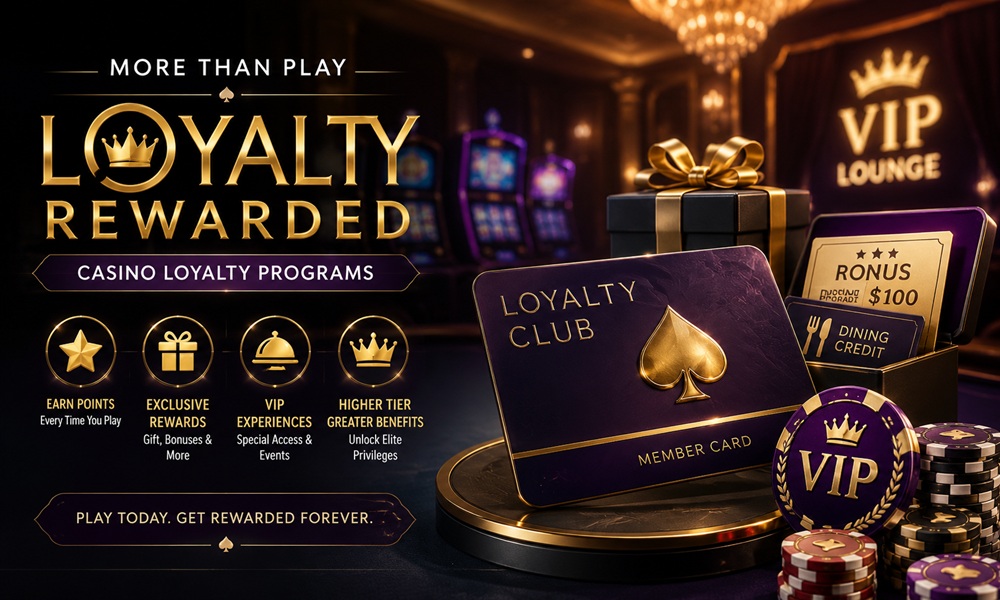
Every casino wants you to come back. So they built a system to reward you for doing exactly that. It has many names: players club, rewards card, VIP program, loyalty scheme. The idea behind all of them is the same.
You play. They track it. You earn perks.
But here is the part most people never learn. The rewards are not based on whether you win or lose. They are based on how much you play. Understand that one distinction and the whole system suddenly makes sense.
This guide explains how casino loyalty programs work, how points and tiers are calculated, what comps you can actually get, and how to squeeze the most value out of the card in your wallet.
Quick answer: A casino loyalty program is a rewards system that tracks your gambling activity and gives back perks called “comps” (complimentary items) such as free play, meals, hotel rooms, and cashback. You earn based on how much you wager over time, not on whether you win, using a hidden figure called your “theoretical loss.” Signing up is free, and always using your card is the single most important habit.
How does a casino loyalty program work?
The moment you sign up, the casino gives you a card (physical on a casino floor, or a linked account online). From then on, every tracked bet feeds a profile.
Modern programs rest on three pillars:
- Point accumulation. You earn points based on how much you wager, adjusted by the game you play.
- Tier advancement. Sustained play over a set period moves you up status levels, from entry tiers to VIP.
- Redemption. You cash points and status in for rewards.
The card does more than count points. It builds a detailed picture of your play across gambling, dining, hotel stays, and entertainment. That profile drives the personalized offers that later land in your inbox or mailbox.
One rule matters above all others: untracked play earns nothing. If you forget to insert your card at a slot or hand it to the dealer at a table, that session simply does not count. Always get “rated.”
How are casino loyalty points calculated?
This is where the system gets interesting, and where the phrase “theoretical loss” comes in.
Casinos do not reward your actual wins or losses. They reward your theoretical loss, also called “theo” or ADT (average daily theoretical). It is the amount the casino mathematically expects to win from you over the long run.
The core formula is simple:
Theoretical loss = House edge × Total amount wagered
Say you wager a total of $1,000 on a game with a 5% house edge. Your theoretical loss is $50, whether you actually walk away up, down, or even. The casino reinvests a slice of that expected win back to you as comps.
Casinos also measure table play with a related formula based on average bet × hours played × decisions per hour × house edge. The staff estimate your average bet and how long you sit, then feed that into the math.
Which games earn points fastest?
Not all play is equal. The game you choose changes how fast you earn.
| Game type | Earning speed | Why |
|---|---|---|
| Slots | Fastest | Every wager is tracked automatically, and the house edge is higher, so theoretical loss builds quickly. |
| Video poker | Moderate | Tracked automatically, but skilled play carries a low edge, so points build slower. |
| Table games | Moderate to strong | Rated by a pit boss based on your average bet and time. Often credited generously. |
A quiet truth sits inside this table. The games that earn comps fastest (slots) also cost you the most in theoretical loss. So faster earning is not free. The comps are, in effect, a partial rebate on money you were statistically expected to lose anyway.
What are casino comps, and what can you get?
“Comps” is short for complimentaries. They are the rewards the loyalty program hands back, and they range from small conveniences to genuine luxury.
Common comps include:
- Free play or bonus credits
- Cashback on losses
- Free or discounted meals and buffet passes
- Complimentary or upgraded hotel rooms
- Free parking and priority lines
- Show tickets and event invitations
- Dedicated hosts and, for big players, flights and suites
Higher-value comps are usually arranged by a casino host. A host builds a relationship with regular players and is authorized to reinvest a percentage of your theoretical loss back to you. Hosts serve everyone from quarter-slot players to high rollers, so you do not need to be wealthy to have one. You just need steady, tracked play.
How do loyalty tiers work?
Most programs use a tiered ladder. As your play adds up over a measurement period, you climb. Typical names run something like Bronze, Silver, Gold, Platinum, and Diamond.
Each tier unlocks better benefits, which can include:
- Faster point earning (a Gold member may earn 25% quicker than Bronze)
- Better redemption rates (VIPs may get more value per point)
- Exclusive bonuses, events, and dedicated service
- Perks like free parking, room upgrades, and priority lines
Two things to watch. First, tiers usually require requalification. Your status is not forever. Most programs reset on an annual cycle, so hitting a level once does not lock it in. Second, points can expire. Mark the dates so you do not lose earned value.
What is a tier match, and why should you ask for one?
This is one of the best shortcuts in the loyalty world, and it goes underused.
In competitive markets, many casinos will match your status from a rival program. If you are Gold at one property, a competitor may instantly grant you Gold at theirs to win your business. You skip the grind entirely.
The move is simple. Show your existing card, ask if they offer a tier match, and hand it over. The worst they can say is no. This tactic is especially common in busy gambling destinations where casinos fight for the same players.
How do you get the most value from a loyalty program?
A few habits separate players who leave value on the table from those who cash it in.
- Always use your card. Every session, every time. Untracked play is invisible to the program.
- Sign up before you play, not after. Enrollment is free, quick, and instantly puts you on the offers list. New members often get a small welcome bonus too.
- Redeem wisely. Free play and direct cashback usually give the best monetary value. That branded merchandise often costs far more points than it is worth.
- Ask about tier match. As covered above, it can save months of play.
- Do the math on points. A flat, automatic cashback (say, 10% weekly on net losses) is often clearer and more valuable than a maze of point conversions. Strip away the fancy tier names and calculate the real cash value.
- Get your table play rated. Hand your card to the dealer or pit boss so your bets actually count.
Are online casino loyalty programs different?
Yes, meaningfully. Online loyalty schemes tend to be more aggressive than their floor-based cousins.
Expect faster point accumulation, more frequent but smaller rewards, weekly cashback on losses, daily reload bonuses, and gamified “missions” or challenges to complete. The VIP ladders often promise reload bonuses, personal account managers, and exclusive rewards at the top tiers.
The same caution applies, though. Behind the prestige of a “Diamond” badge sits a calculated formula. Work out the true conversion rate before chasing a tier, so you do not overspend for a reward that is mathematically weaker than a simple cashback offer.
The mindset that keeps loyalty programs fun
Seasoned players share a useful frame. They do not treat a free room as a gift. They treat it as a reduction in the cost of their entertainment. The free play extends a session, not guarantees a win.
Or, as one widely echoed piece of forum advice puts it: play to have fun, not to chase the rewards. Loyalty programs are retention tools designed to keep you coming back. Used with clear eyes, they genuinely lower the cost of a night out. Used to justify extra spending, they do the opposite.
Set a budget, treat gambling as entertainment, and let the comps be a bonus rather than the point. If betting ever stops feeling fun, take a break and reach out to a support service in your area.
Frequently asked questions
Does it cost anything to join a casino loyalty program?
No. Enrollment is free, and there is no real downside beyond landing on a few mailing lists. Signing up alone puts you on the offers radar.
Do I earn comps even if I win?
Yes. Comps are based on how much you play (your theoretical loss), not on your actual results. You can win money and still receive offers.
What is theoretical loss?
It is the amount the casino expects to win from you long term, calculated as house edge multiplied by total wagered. Your comps are a slice of that figure.
How do I get a casino host?
Play consistently with your card inserted, and hosts often reach out. You can also ask the players club desk about being assigned one once your play is steady.
Can I lose my tier status?
Yes. Most programs require annual requalification, and points can expire. Track your dates so you do not lose earned value.